Bridge Loan Maturity: How Investors Can Plan the Exit Before the Deadline
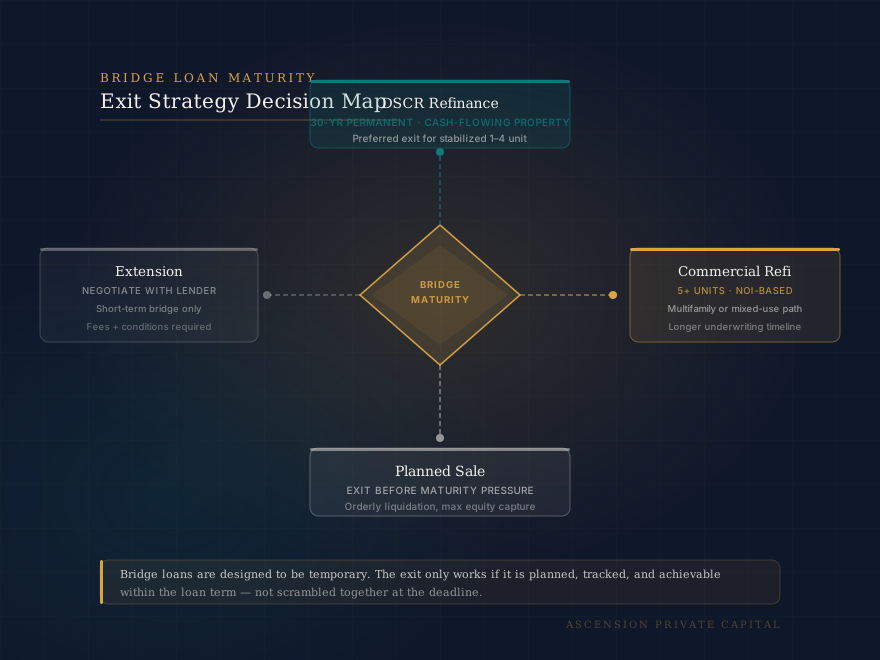
Bridge loans are designed to be temporary. They fund a transition: acquisition to stabilization, renovation to lease-up, or short-term hold to permanent financing. But the transition only works if the exit is planned, tracked, and achievable within the loan term.
01
Why Bridge Loans Need a Clear Exit Strategy
Bridge loans are short-term by design. Typical terms range from 12 to 36 months, depending on the lender and the deal. Unlike long-term permanent financing, bridge capital is priced with the expectation that the borrower will exit the loan well within the term, not hold it until the last day.
The exit strategy is not an afterthought or a box to check on the application. It is the foundation of the entire deal structure. Capital partners underwriting bridge loans evaluate the exit as carefully as the entry, because their repayment depends on the borrower successfully executing that exit.
Investors who treat the exit as a problem for later create the conditions for maturity risk. The time to plan the exit is before the bridge loan closes, and then to actively manage toward that exit throughout the hold period.
02
Common Exit Paths for Bridge Loans
Every bridge loan needs at least one defined exit path, and ideally a backup. The appropriate exit depends on the deal type, the property's performance trajectory, and the investor's long-term hold strategy.
DSCR Refinance
The most common exit for residential investment bridge loans. Once the property is stabilized (renovated, leased, and producing market-rate rental income), the investor refinances into a long-term DSCR loan. The DSCR loan pays off the bridge balance and provides a permanent hold structure. For more on this strategy, see Bridge to DSCR.
Commercial or Conventional Refinance
For larger multifamily or commercial assets, the exit may be into agency financing, CMBS, bank debt, or another permanent commercial product. These exits typically require more stabilization time and documentation than a DSCR refinance.
Sale of the Property
For fix-and-flip investors or those executing a value-add strategy with a planned disposition, the exit is a sale. The sale proceeds pay off the bridge loan balance. This exit requires the renovation to be complete and the property to be marketable within the loan term.
Recapitalization or New Bridge
In some cases, an investor may refinance one bridge loan into another, particularly when the property has appreciated or improved but is not yet ready for permanent financing. This is not ideal as a primary plan but can be viable as a backup if the asset has meaningful equity.
Extension
Many bridge loans include built-in extension options, typically 6 or 12 months beyond the initial term. Extensions usually require a fee and may have performance conditions. They buy time but do not eliminate the need for a terminal exit.
03
Why the Exit Should Be Evaluated Early
The exit evaluation should begin before the bridge loan closes and continue throughout the hold period. Waiting until the final months of the term to assess exit readiness is one of the primary causes of maturity problems.
A practical exit evaluation cadence:
- At origination: define the primary and backup exit, model the timeline, and set performance milestones
- Monthly: track renovation progress, lease-up velocity, income growth, and expense trends
- At the midpoint of the loan term: formally assess whether the primary exit is on track
- 6 months before maturity: begin active refinance preparation (documentation, lender outreach, appraisal scheduling)
- 3 months before maturity: if the primary exit is not progressing, activate the backup plan
This cadence is not burdensome. It is the difference between managing a transition and being surprised by a deadline.
04
How Property Performance Affects Takeout Options
The refinance lender evaluating the takeout does not care what the bridge lender agreed to at origination. They evaluate the property based on its current condition and performance. The variables that most directly affect whether the takeout is available include:
Renovation Completion
The property must be in market-ready condition. Incomplete renovations, open permits, or remaining punch-list items can delay or prevent a refinance.
Lease-Up and Occupancy
For DSCR refinance, the property needs a tenant in place paying market rent. For commercial takeout, stabilized occupancy at or above the lender's minimum threshold is required.
Appraised Value
The refinance loan is sized against the current appraised value. If the post-renovation appraisal does not support the needed LTV, the refinance amount may fall short of the bridge payoff.
Rental Income and DSCR
The property's rental income must generate a debt service coverage ratio that meets the refinance lender's minimum. Low rents, vacancy, or high expenses can push the DSCR below threshold.
Borrower Credit and Reserves
Refinance lenders have minimum credit score requirements and reserve expectations. If borrower credit or liquidity deteriorated during the bridge hold, the takeout may be affected.
05
Bridge-to-DSCR Planning
The bridge-to-DSCR strategy is one of the most common exit structures for residential real estate investors using bridge capital. The concept is straightforward: acquire and renovate with short-term bridge capital, stabilize the property with a qualified tenant, and then refinance into a long-term DSCR loan.
For this exit to work within the bridge term, several things need to happen in sequence:
- Renovation must be completed within the budgeted timeline and cost
- The property must be listed and leased to a qualified tenant at market rent
- An appraisal must support a value that allows the DSCR loan to cover the bridge payoff
- The borrower must meet the DSCR lender's credit, reserve, and entity requirements
- The DSCR loan must close before the bridge loan matures
Each step takes time. Renovation delays, leasing timelines longer than projected, or appraisals that come in below expectations can push the exit past the available window. Investors planning a bridge-to-DSCR exit should build buffer time into their timeline and monitor progress against milestones throughout the hold. For the detailed strategy breakdown, see Bridge Loans vs. DSCR Loans: Which Comes First?.
06
Warning Signs That the Original Exit May Not Work
Most exit failures do not arrive as sudden surprises. They develop gradually as early indicators go unaddressed. Investors who monitor their deal actively can identify warning signs early enough to adjust:
- Renovation is more than 30 days behind the original schedule with no clear completion date
- The property has been listed for lease for 60+ days without a qualified applicant
- Comparable rents in the area have softened since the original underwriting
- Contractor disputes, permit delays, or material cost overruns are consuming contingency reserves
- The borrower's personal liquidity has declined significantly during the hold
- The current interest rate environment makes the refinance DSCR calculation tighter than originally modeled
- An extension has already been used and no further extensions are available
Any one of these signals is manageable on its own. But when multiple warning signs appear simultaneously, or when they appear late in the loan term, the investor should immediately begin evaluating backup exit options. Waiting for the problem to resolve itself is the highest-risk response.
07
How APC Helps Investors Evaluate Alternate Capital Paths
Ascension Private Capital works with investors who are approaching bridge loan maturity and need to evaluate whether their original exit is still viable, or whether an alternate path is needed.
That evaluation typically includes:
- Reviewing the current property performance against the original exit assumptions
- Assessing whether the property qualifies for DSCR, commercial, or alternative refinance products
- Identifying capital shortfalls between the refinance amount and the bridge payoff
- Evaluating whether a new bridge, extension, or restructuring makes sense
- Helping investors prepare the documentation and positioning for the next capital step
- Sourcing capital partner options based on the specific scenario and timeline
APC does not guarantee refinance outcomes, extensions, or capital partner approvals. All financing is subject to underwriting and lender-specific criteria. Our role is to help investors understand where they stand, what options exist, and how to pursue the most realistic path forward given the deal variables and the remaining timeline.
Need Help Planning a Bridge Loan Exit?
Submit your scenario and we will evaluate the current property performance, assess exit readiness, and help identify the right capital path for your timeline.
Submit a Funding RequestRelated Insights
Continue exploring practical capital strategy, lender expectations, and funding structure insights.
Bridge Loans vs. DSCR Loans: Which Comes First?
Some deals need temporary capital before they are ready for long-term rental financing.
Loan Maturity Risk in 2026: What Real Estate Investors Need to Know
What loan maturity risk means for investors in 2026 and how to plan before the deadline arrives.
What Happens When a Real Estate Loan Matures and You Can't Refinance?
When a loan matures without a clear refinance path, investors face limited and often costly options.
Your Exit Strategy Starts Now
The best bridge loan exits are planned from day one and managed actively. Submit your scenario and let us help you evaluate the path forward.
Submit a Funding Request