Additional Capital Solutions
Gap Funding
Bridge the gap between your primary financing and total project costs with flexible mezzanine capital.
Gap funding provides the additional capital you need when primary financing doesn't cover your entire project. Whether you need more equity in a deal, additional renovation budget, or supplemental acquisition capital, gap funding fills the difference between what you have and what you need.
Flexible Capital
Subordinated financing that works alongside your primary loan to maximize leverage.
Fast Deployment
Quick approval and funding when you need capital immediately.
Creative Structures
Flexible terms including equity participation, profit splits, or fixed returns.
No Upfront Equity Required
Preserve your capital for other opportunities while still securing the deal.
Key Benefits
Typical Loan Terms
Ideal For
How It Works
Our Process
Submit Funding Need
Provide details on the project, primary financing, and funding gap amount.
Structure Proposal
We analyze the deal and propose gap financing terms and structure.
Approval
Rapid approval focused on deal fundamentals and exit strategy.
Funding
Fund within days to help you close on time or complete your project.
Related Resources
Learn more about financing strategies and investment property loans
What Is Gap Funding in Real Estate?
Understand how gap funding works, when it makes sense, and how it compares to bringing more cash to the table.
When Investors Use Gap Funding
Discover the most common scenarios where gap funding helps investors close deals and maximize returns.
Gap Funding vs. Bringing More Cash to Close
Compare the pros and cons of using gap funding versus contributing additional equity from your own capital.
Free Download
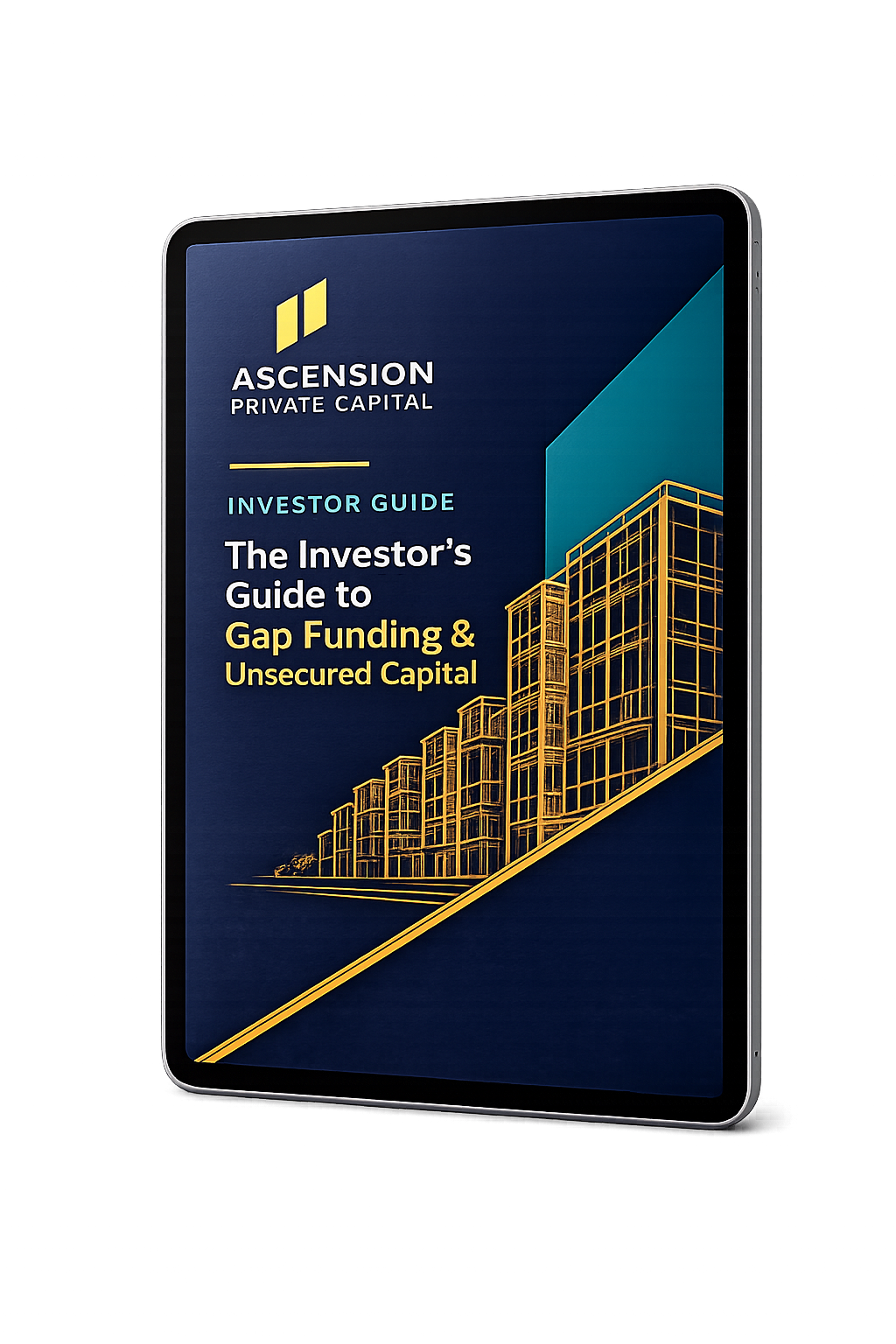
The Investor's Guide to
Gap Funding
Learn how investors solve down payment shortfalls, closing capital gaps, and funding mismatches with strategies like unsecured capital and cross-collateralization.
- Solve down payment shortfalls without depleting reserves
- Understand unsecured capital programs (FICO 680+)
- Learn when cross-collateralization makes sense
- See the decision framework for your exact situation
PDF Guide
The Investor's Guide to Gap Funding & Unsecured Capital
Get the Free Guide
Enter your details below to access the guide instantly.
Gap Funding — Common Questions
Answers to questions investors frequently ask before exploring gap capital options.
What is gap funding in a real estate deal?
Gap funding refers to subordinated capital that covers the difference between a senior loan and the total cost of a project. When a primary lender's proceeds fall short of what an investor needs to close or complete a deal, gap funding can fill that shortfall (whether it's a down payment gap, a rehab budget shortfall, or additional acquisition capital). Structures vary and all terms are subject to capital partner approval.
When would an investor use gap funding?
Gap funding is typically explored when a senior lender's loan-to-value or loan-to-cost limits leave a project undercapitalized. Common scenarios include fix-and-flip deals where rehab costs exceed the initial budget, acquisitions where a buyer needs to close quickly without additional liquidity, or value-add projects where stabilization costs run higher than projected.
Can gap funding help with down payment or closing shortfalls?
In some deal structures, gap capital may help cover equity requirements or closing-cost shortfalls that a primary lender will not fund. Whether this is possible depends on the deal, the primary lender's subordinate debt restrictions, and the capital partner reviewing the request. Not all deals qualify, and there are no guarantees of approval or funding.
Can gap funding be layered with a senior lender?
Yes. Gap funding is designed to work alongside a primary loan, not replace it. The gap capital sits in a subordinate position behind the senior lender. The feasibility of stacking a second position depends on the senior lender's intercreditor requirements and whether the combined capital structure makes sense given the deal's exit strategy and projected returns.
What should an investor consider before pursuing gap funding?
Investors should understand why the gap exists before pursuing additional capital. If a senior lender is coming in short due to asset quality, borrower profile, or deal fundamentals, adding subordinate debt may not solve the underlying issue. Strong candidates for gap funding typically have a clear exit, a defined use of funds, and a senior loan already in place or approved. Ascension Private Capital helps investors assess deal structure before sourcing gap capital.
Markets We Serve
Ascension Private Capital works with real estate investors across key U.S. markets. Gap funding availability and deal requirements vary by state and asset type.
View all markets — Funding options are subject to deal review, capital partner availability, and applicable requirements.
Ready to Get Started?
Submit your deal details and receive a preliminary decision within 24-48 hours. Our team is ready to review your opportunity.