Capital Solutions
What Is Gap Funding in Real Estate
Understanding gap funding and how it helps real estate investors bridge the difference between available financing and total project needs.
Gap Funding Defined
Gap funding is subordinated capital that fills the difference between a property's total project cost and the amount of primary financing available. It sits in second position behind the primary loan and allows investors to complete deals when their primary lender won't provide 100% of the needed capital.
Most bridge loans fund 75-90% of a project's total cost. If your deal requires more capital than your primary loan provides—whether for acquisition, renovation, or unexpected expenses—gap funding bridges that shortfall without requiring additional out-of-pocket cash from the investor.
Simple Example
Total Project Cost: $500,000
Primary Bridge Loan (80%): $400,000
Gap Needed: $100,000
Rather than bringing $100,000 in cash, the investor secures gap funding to complete the deal.
How Gap Funding Works
Gap funding is structured as subordinated debt, meaning it sits in second lien position behind your primary mortgage. The gap lender accepts higher risk in exchange for higher returns, which may include fixed interest, profit participation, or equity upside depending on the deal structure.
Typical Amounts
$50,000 to $1M+ depending on project size and total capital need
Term Length
6-24 months, typically aligned with primary loan maturity
Collateral
Second lien position on the subject property
Common Gap Funding Use Cases
Renovation Budget Shortfall
Your primary lender approves 80% LTC but your renovation scope requires more capital than initially estimated. Gap funding covers the additional renovation costs without renegotiating your primary loan.
Acquisition Premium
In competitive markets, you need to offer above asking price to secure the property. Gap funding provides the extra capital to close at the higher purchase price while maintaining deal economics.
Capital Preservation
You want to preserve cash for other opportunities or maintain liquidity. Rather than tying up your own capital, gap funding allows you to leverage the deal more aggressively and keep cash available for additional acquisitions.
Unexpected Cost Overruns
Mid-renovation, you discover additional work needed—structural issues, permit requirements, or scope expansion. Gap funding provides fast supplemental capital without disrupting your existing financing.
Gap Funding vs Traditional Equity
While gap funding costs more than primary financing, it's typically less expensive than bringing in equity partners who expect 20-50% of profits. Gap funding structures vary, but many deals use fixed-rate subordinated debt with no equity dilution.
Key Advantages
- Close deals that would otherwise require too much personal capital
- Preserve liquidity for multiple simultaneous projects
- Avoid equity dilution from bringing in additional partners
- Fast approval and funding—often within 5-10 days
- Flexible structures tailored to deal-specific circumstances
- Works alongside bridge, DSCR, and construction loans
How Gap Funding Gets Repaid
Gap funding is typically repaid at the same time as your primary loan. Most investors using bridge-to-DSCR strategies will refinance into a long-term DSCR loan once the property is stabilized, paying off both the bridge loan and gap funding simultaneously from the refinance proceeds.
Typical Exit Scenarios
- Refinance: Once property is stabilized, refinance into DSCR loan and pay off both primary and gap lenders
- Sale: Sell the property after renovation and pay off all liens from sale proceeds
- Cash-Out Refi: Pull equity out through a cash-out refinance and repay gap lender
What Lenders Look For
Gap funding approval focuses on deal fundamentals rather than borrower financial strength. Lenders evaluate whether the completed project will generate sufficient value to repay both the primary loan and gap funding.
Primary Evaluation Factors
- ✓ After-repair value (ARV) and equity cushion
- ✓ Total leverage vs market value
- ✓ Primary lender terms and approval status
- ✓ Borrower experience and track record
- ✓ Clear exit strategy and timeline
- ✓ Market conditions and rental demand
Required Documentation
- ✓ Property details and purchase contract
- ✓ Renovation scope and budget
- ✓ Primary loan term sheet or approval
- ✓ ARV estimate or appraisal
- ✓ Sources and uses of funds breakdown
- ✓ Exit strategy documentation
When to Consider Gap Funding
Gap funding makes sense when the cost of capital is justified by the deal's profit potential and when preserving your own cash provides more strategic value than minimizing total financing costs.
Explore our Gap Funding program to learn about our flexible subordinated capital solutions for real estate investors.
Free Download
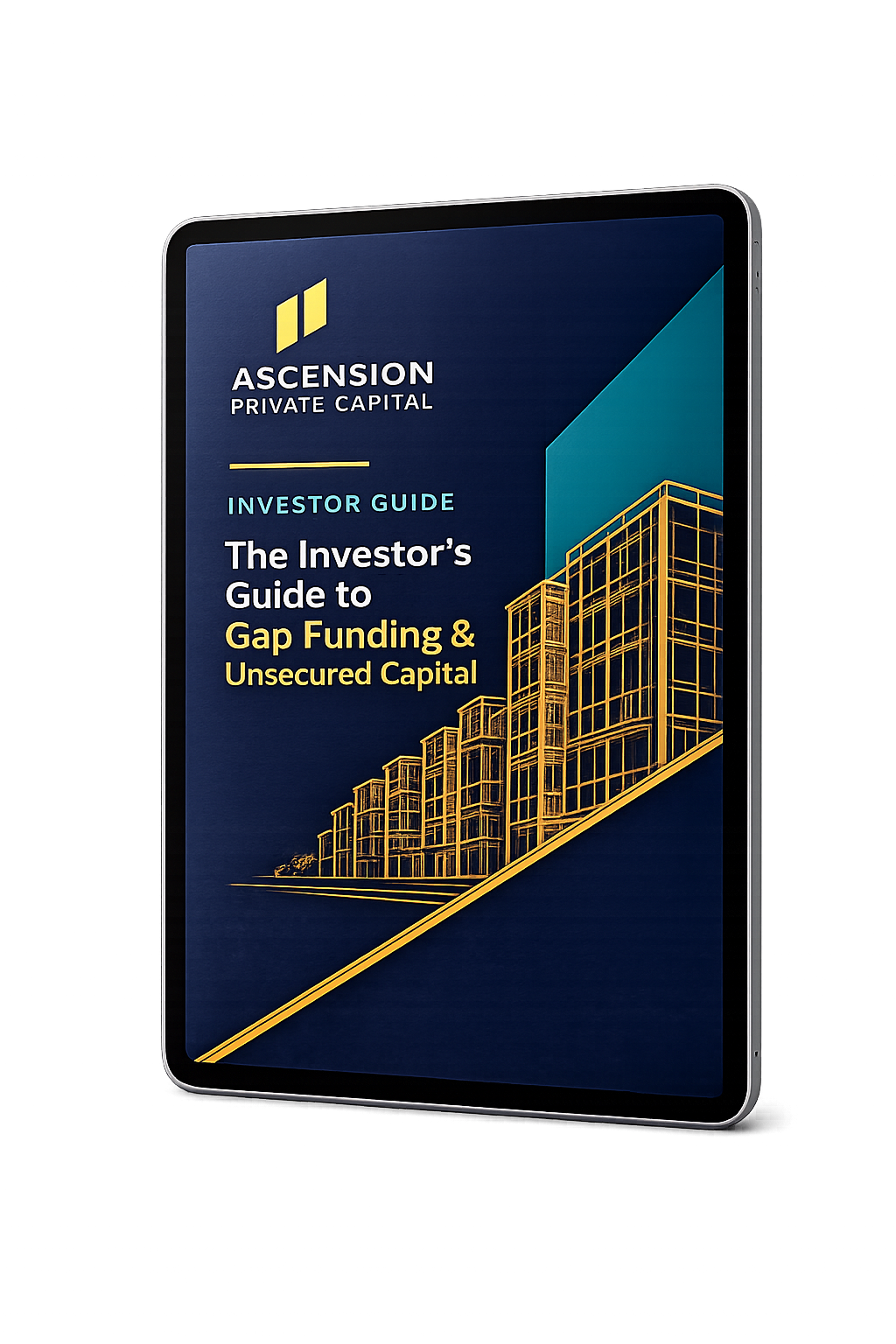
The Investor's Guide to
Gap Funding
Learn how investors solve down payment shortfalls, closing capital gaps, and funding mismatches with strategies like unsecured capital and cross-collateralization.
- Solve down payment shortfalls without depleting reserves
- Understand unsecured capital programs (FICO 680+)
- Learn when cross-collateralization makes sense
- See the decision framework for your exact situation
PDF Guide
The Investor's Guide to Gap Funding & Unsecured Capital
Get the Free Guide
Enter your details below to access the guide instantly.
Need Gap Funding for Your Deal?
Get fast approval for subordinated capital that fills your financing gap and helps you close more deals.