Commercial Loan Document Checklist for 2026: What Investors Should Prepare Before Seeking Financing
Commercial and multifamily deals require more documentation depth than residential investment loans. Having the right file ready before approaching capital partners can significantly improve the speed and quality of feedback.
01
Why Commercial Documentation Differs From Residential Loan Files
For 1–4 unit residential investment properties, lender documentation often centers on the borrower's credit profile, the purchase contract, a property appraisal, and basic entity paperwork. The property itself is relatively simple to evaluate — rent is either market-rate or close to it, and operating expenses are predictable.
Commercial and multifamily assets are different. They are underwritten more like operating businesses. Capital partners need to understand how the property performs financially, how it is managed, what the lease structure looks like, and whether the sponsor has the experience to execute the business plan.
This means the documentation package is deeper, more detailed, and serves a different purpose. It is not just about proving the borrower can qualify — it is about proving the asset can support the debt and that the deal makes economic sense. Understanding this distinction early helps investors prepare the right file the first time.
02
Entity and Sponsor Documents
For commercial and multifamily transactions, capital partners review the entity and sponsor with more scrutiny than in a typical residential investor deal. Sponsor strength can directly affect terms, leverage, and whether a deal moves forward at all.
Operating Agreement or Partnership Agreement
The governing document for the entity taking title. Capital partners review decision-making authority, ownership percentages, and guarantor structure.
Articles of Organization or Incorporation
State filing confirming entity formation. Required for virtually every commercial transaction.
Certificate of Good Standing
Current state certification that the entity is authorized to transact business.
EIN Confirmation Letter
IRS-issued employer identification number for the borrowing entity.
Sponsor Resume or Track Record
A brief summary of the principal's relevant commercial or multifamily experience — prior projects, asset types, and outcomes.
Personal Financial Statement (PFS)
Summarizes the guarantor's net worth, assets, and liabilities. Many commercial capital partners require this at the term sheet stage.
Organizational Chart
For deals involving multiple entities, JV structures, or co-sponsors — a simple diagram showing ownership and guarantor relationships.
03
Property and Asset Documents
Capital partners underwrite the asset, not just the borrower. The property documents establish what is being acquired or refinanced, its condition, and its current performance.
Property Address, Description, and Unit Count
Basic identifying information. Include property type, year built, total square footage, and unit mix.
Current Rent Roll
Unit-by-unit breakdown showing current rents, lease start/end dates, occupancy status, and any concessions.
Executed Leases
Signed lease agreements for occupied units. Capital partners may review lease terms, renewal clauses, and tenant quality.
Trailing 12-Month (T12) Operating Statement
Income and expense history for the prior 12 months. This is the primary financial performance document for stabilized assets.
Year-to-Date (YTD) Financial Statement
Current year income and expense summary, used alongside the T12 for trending analysis.
Property Photos
Interior and exterior photos showing overall condition, common areas, unit interiors, and any deferred maintenance.
Environmental or Inspection Reports
If available. Phase I environmental assessments, property condition assessments, or engineering reports.
04
Financial Performance Documents
Beyond the rent roll and T12, capital partners reviewing commercial and multifamily scenarios often request additional financial context — particularly for larger assets or more complex transactions.
Historical Operating Statements (2–3 Years)
For stabilized assets, multi-year income and expense history helps capital partners evaluate performance trends and consistency.
Current Debt Schedule
Summary of all existing liens, loan balances, maturity dates, and payment obligations on the property.
Property Tax Records
Current assessed value and annual tax liability. Tax reassessment risk after acquisition is a common underwriting consideration.
Insurance Summary
Current coverage, annual premium, and carrier information. Some capital partners require specific coverage types or limits.
Utility Expense Records
Monthly or annual utility costs, particularly for assets where the owner pays common area or tenant utilities.
05
Deal Summary and Business Plan
Every commercial or multifamily financing request benefits from a clear, written deal summary. This is the document that ties everything together and communicates the investor's thesis to the capital partner.
A strong deal summary typically covers:
- Transaction type — acquisition, refinance, cash-out, or recapitalization
- Purchase price or current appraised value
- Requested financing amount and proposed capital structure
- Business plan — stabilization, value-add, repositioning, or hold
- Renovation or capital improvement budget if applicable
- Projected timeline from acquisition to stabilization or exit
- Exit strategy — sale, long-term refinance, or hold
- Sponsor's relevant experience with similar assets
Capital partners use the deal summary to determine whether a scenario fits their lending criteria before they request a full documentation package. A clear, concise summary moves the conversation forward faster than raw data alone.
06
Bridge, Construction, and Repositioning Scenarios
For transitional deals — bridge acquisitions, ground-up construction, or value-add repositioning — documentation requirements shift toward the business plan, project budget, and timeline.
In addition to the standard property and entity documents above, these scenarios typically require:
Detailed Project Budget
Line-item cost breakdown for renovation, construction, or capital improvements. Should include hard costs, soft costs, and contingency.
Construction Timeline or Draw Schedule
Phased timeline showing when draws will be requested and what milestones trigger each disbursement.
Contractor Information and Bid
General contractor name, license, insurance, and a written bid or proposal supporting the budget.
Architectural Plans or Permits
For ground-up construction or major structural renovation. Required by most capital partners for construction-phase financing.
Pro Forma Operating Budget
Projected income and expenses after stabilization. Used by capital partners to evaluate exit feasibility and long-term debt capacity.
For more on bridge and construction deal structure, see Commercial & Multifamily Financing.
07
What to Send First If Your File Is Not Complete
Not every deal will have a fully assembled file at the time of initial inquiry. For commercial and multifamily scenarios, the minimum useful package for a preliminary review typically includes:
- Property address, unit count, and asset type
- Transaction type and requested loan amount
- Current rent roll or summary of income
- Brief business plan and exit strategy
- Sponsor background and relevant experience
- Any available financial summary (T12, YTD, or partial operating history)
A partial but honest package is better than waiting months for a perfect file. Capital partners can often provide preliminary feedback on deal fit, structure, and likely next steps based on a clear summary and the key financial documents. Items like appraisals, environmental reports, and full lease files can follow once a deal moves into formal underwriting.
08
Why Organized Files Help Capital Partners Move Faster
Commercial capital partners process many scenarios simultaneously. A well-organized, clearly labeled file that includes the key documents up front signals professionalism and reduces the time between initial submission and meaningful feedback.
Disorganized or incomplete files create friction. Every time a capital partner has to request a missing document, the deal pauses. That friction compounds when time-sensitive deadlines — contract contingencies, rate locks, or closing dates — are involved.
At Ascension Private Capital, we review commercial and multifamily scenarios before they go to capital partners. Part of that process is identifying what is missing from the file and helping investors prioritize what to assemble first — so the deal is positioned for the best possible review.
For the residential investor document equivalent, see What Documents Lenders Usually Need Before Reviewing a Deal. For common questions about the review process, visit our FAQ.
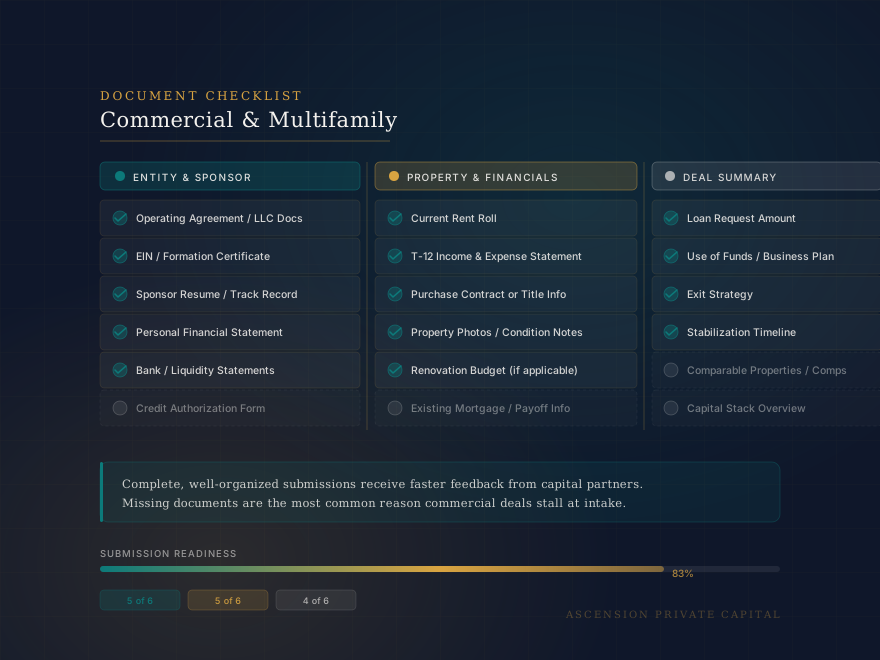
Complete Commercial Document Checklist
All Documents at a Glance
Have a Commercial or Multifamily Deal to Discuss?
Submit your funding scenario and we will review the deal based on property type, capital need, sponsor profile, and available capital partner options.
Submit a Funding RequestRelated Insights
Continue exploring practical capital strategy, lender expectations, and funding structure insights.
Commercial Real Estate Financing in 2026: What Investors Should Prepare For
How commercial real estate financing is being evaluated in 2026 — underwriting shifts, capital stack considerations, and how to position deals.
What Documents Lenders Usually Need Before Reviewing a Deal
A simple guide to purchase contracts, scope of work, rehab budgets, entity documents, bank statements, and rent rolls.
How Commercial and Multifamily Underwriting Differs From 1–4 Unit DSCR Loans
What changes when investors move from DSCR lending into commercial and multifamily financing.
Ready to Submit Your File?
The more organized your submission, the faster we can assess fit, identify capital partner options, and move toward a decision.
Submit a Funding Request